
 all communications are private and not shared with other parties.
Siding That Looks Like Wood: Fiber Cement and Vinyl Wood-Grain Options for Bay Area & Sacramento Homes
Key Takeaway
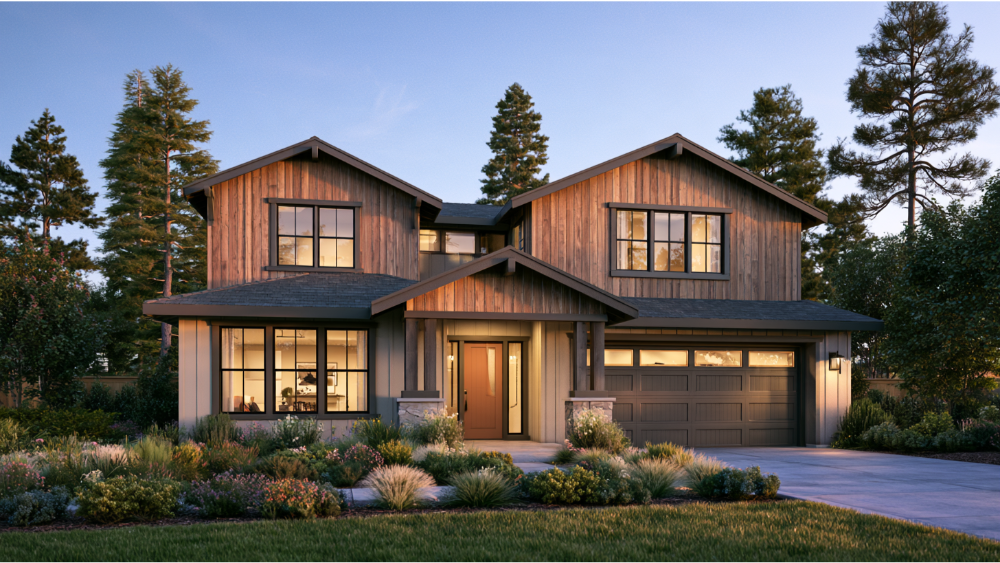
Siding that looks like wood comes down to two strong options: fiber cement delivers the most convincing painted-wood appearance in lap, shingle, and board-and-batten profiles, while premium insulated vinyl siding offers realistic wood grain with less upkeep and better value. Fiber cement panels are noncombustible with Class A fire ratings, making them especially relevant for California wildfire zones. The right choice depends on which wood look you want and how much detail matters at close range.
Siding That Looks Like Wood: The Short Answer
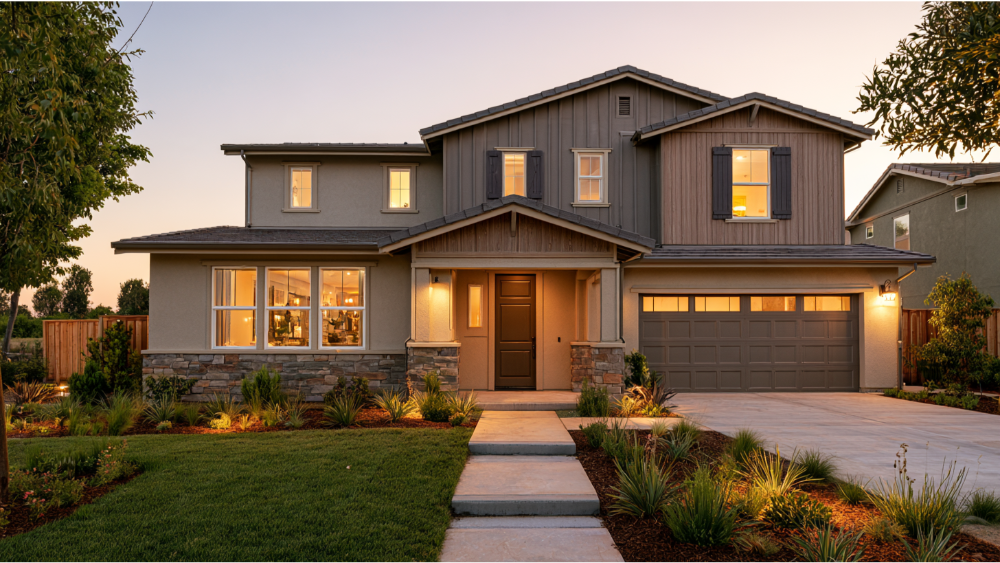
If you love the warmth of real wood but not the repainting, rot, or pests that come with it, you have two strong choices. Fiber cement siding generally gives the most convincing painted-wood look, especially in lap, shingle, and board-and-batten profiles. Premium insulated vinyl siding delivers a realistic wood-grain appearance with less upkeep and better Best Value, though it can read a little less natural up close. Both kinds of siding resist moisture, insects, and warping far better than wood siding ever could. For a homeowner weighing a meaningful whole-home exterior project, the right pick comes down to the kind of wood look you want and how carefully the whole wall is detailed.
First, Decide Which “Wood Look” You Actually Want
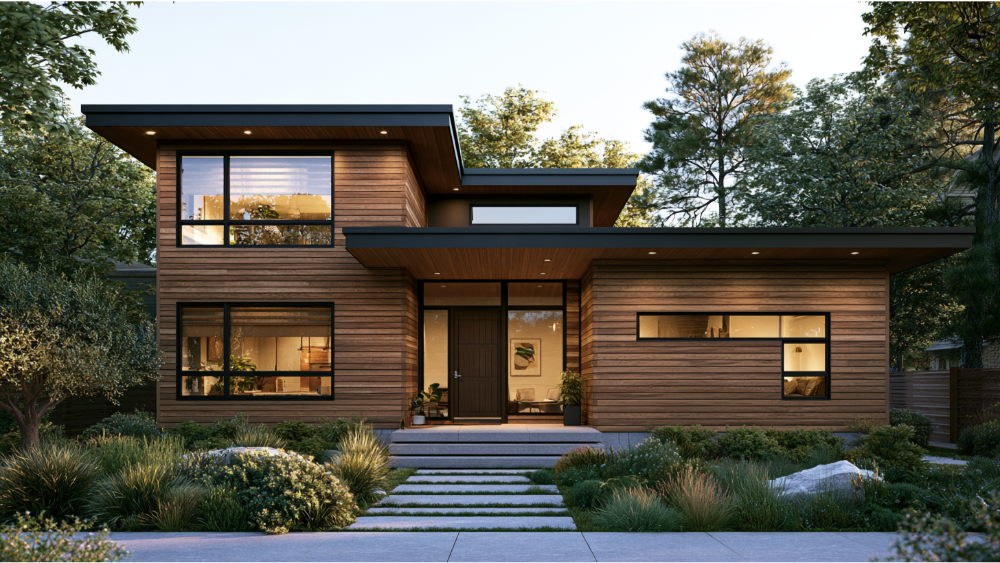
Before comparing siding materials, pin down the look you’re after. Most “wood” appearances fall into two camps. A painted-wood appearance is traditional clapboard, cedar-style shake or shingle, or vertical board-and-batten, where texture and shadow lines carry the character. A natural or stained-wood appearance shows tone variation, visible knots, grain depth, and low-sheen color movement, the kind of rich, rustic warmth people picture when they think of a cabin. These warm tones and that timeless beauty are exactly what draws homeowners to a natural wood aesthetic in the first place. Fiber cement and vinyl siding both excel at reproducing painted wood. Multitone printed or factory-applied finishes can imitate stained natural wood, but the realism varies by product. The four looks homeowners most often want:
- Painted clapboard
- Cedar-style shake or shingle
- Vertical board-and-batten
- Natural or stained tones
No single material reproduces all four equally well, so decide your target first.
Fiber Cement vs. Wood-Grain Vinyl Siding at a Glance
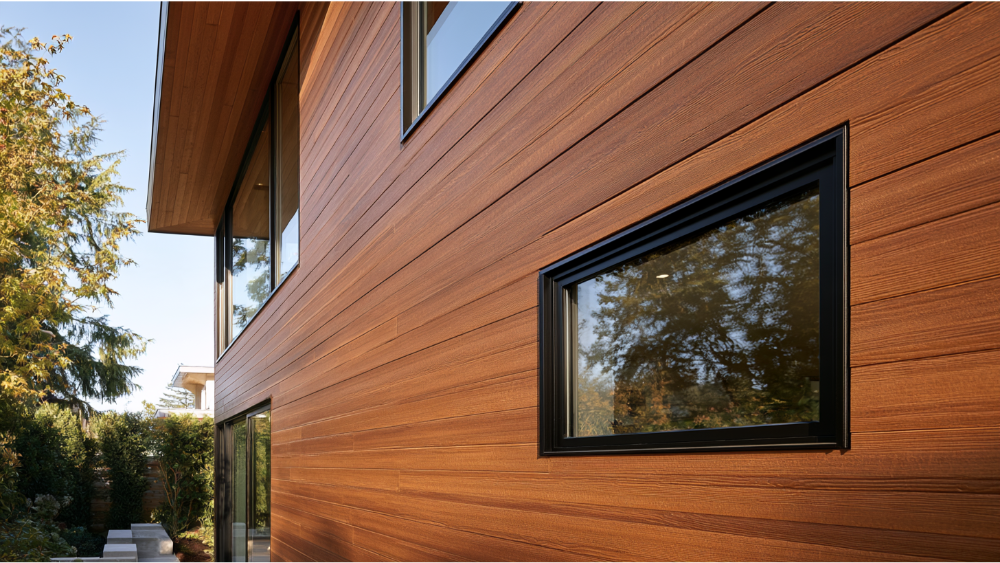
Both options give you the beauty of a wood look without the ongoing maintenance that traditional timber demands. Many customers find siding that looks like real wood is simply a better option than the real thing once they weigh the advantages. Here’s how they compare where it counts.
| Factor | Fiber Cement | Insulated Vinyl |
|---|---|---|
| Close-up realism | Strongest for painted wood | Good; can read less natural very close |
| Street-view realism | Convincing | Convincing |
| Profiles | Lap, shingle, vertical panels | Clapboard, Dutch lap, shake, shingle, vertical |
| Finish options | Factory finish or field paint | Factory color |
| Upkeep | Low; inspect caulk, finish, clearances | Low; occasional cleaning |
| Fire classification | Noncombustible, Class A (named products) | Combustible; verify by product/location |
| Added insulation | None inherent | Continuous insulation, product-specific |
| Durability | High; rigid and dimensionally stable | High; resists rot and pests |
| Relative investment | Higher | Best Value |
| Best fit | Close-up detail, fire performance | Low maintenance, value, fewer seams |
Neither is truly maintenance-free, and both are far easier to maintain than real wood. Vinyl can soften under extreme heat and grow brittle in deep cold, while fiber cement still needs periodic inspection.
How Fiber Cement Creates a Convincing Wood Siding Appearance
Fiber cement blends cement, sand, and cellulose fibers into rigid wood panels that come in both wood-grain and smooth textures, in lap, shingle, and vertical panel profiles. That rigidity and thickness help produce straighter courses and deeper shadow lines, which is a big part of why it reads as painted wood siding. You can order the panels with a factory finish or paint them in the field; one allowed partner lists a 15-year limited finish warranty on its factory finish. The durable surface holds up well against Bay Area and Sacramento weather, from coastal damp to inland heat, for long lasting performance. It’s low-maintenance, not maintenance-free, so caulk, finish, clearances, and penetrations still want inspection over time. Cutting the board also releases respirable silica, which is one reason professional installation with proper dust control matters. California code covers these panels under ASTM C1186 Type A, minimum Grade II, with lap siding limited to 12 inches wide.
How Vinyl Siding Mimics Wood Grain
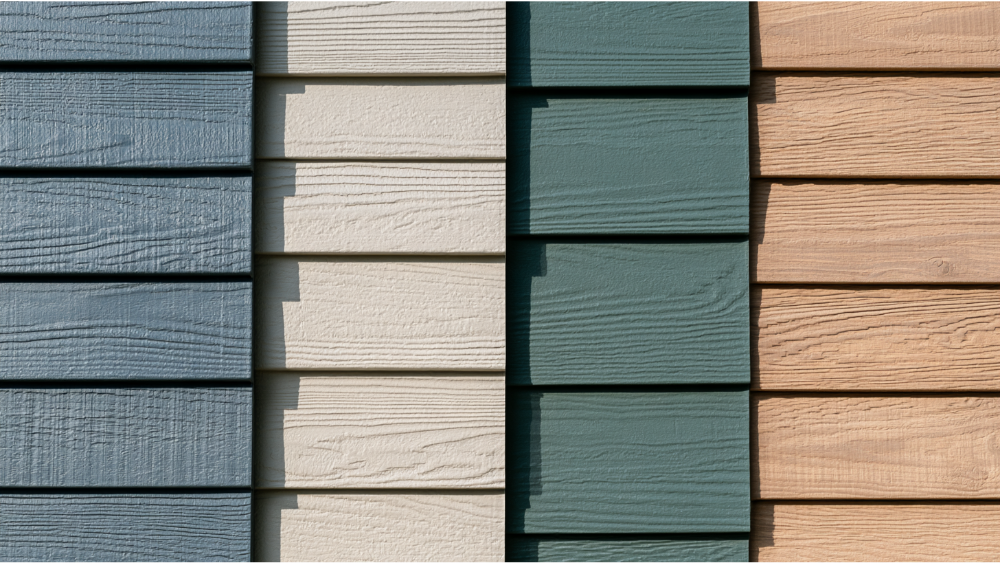
Vinyl siding recreates the look of wood with embossed grain and molded profiles, offered in clapboard, Dutch lap, shake, shingle, and vertical styles for traditional and modern homes alike. The real difference comes with insulated vinyl: a permanently attached foam backing adds rigidity, straighter sight lines, and continuous insulation. Longer, stiffer panels also mean fewer overlaps and less visible seaming. The Prodigy insulated siding we install shows this well, with a finely milled cedar-grain surface in Double 6-inch clapboard and Double 5-inch Dutch lap. Its panels run 16 feet 8 inches, about 39% longer than a typical 12-foot panel, with nominal insulation up to 1½ inches and up to R-3.0. Those figures are product- and profile-specific, so we confirm current literature for your project. On fading, color retention is certified under ASTM D6864 or D7251 rather than promised to “never fade.” Premium vinyl can look less natural at very close range, so always view full-size panels up close.
What Actually Makes Wood-Look Siding Look Real
Realism isn’t about the deepest artificial grain. The details that sell the look are board width and reveal, butt and trim thickness, shadow lines, how often seams appear, whether the grain pattern repeats, corner treatment, clean edges, window and door trim proportions, and sheen (overly glossy reads fake fast). Alignment during installation ties it all together and gives the wall real depth. Viewing distance changes everything, too. In a small sample you notice grain and sheen. From 5 to 10 feet you start to catch seams and trim. From the street, repeating grain texture and seam frequency decide whether it convinces. For example, good detailing holds up at every distance, whether you choose panels in fiber cement, vinyl, or wood-look options built from advanced composite materials.
Comparing Natural Wood, Composite, and Metal Siding
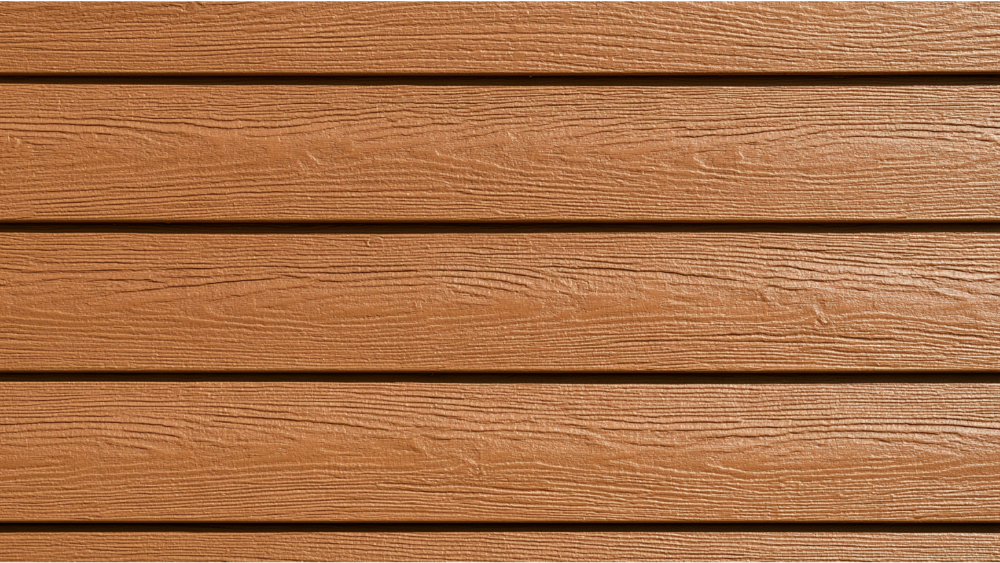
Classic cedar and other natural wood deliver undeniable character, but they ask for regular staining and repair to preserve their finish against moisture. Advanced composite materials and fiber cement were engineered to keep that refined, craftsman appearance while shedding the upkeep. Even steel and other metal siding now come in wood-look finishes, so you can create a warm, rich exterior that stays durable for decades. The point is to match the material to the building, your climate, and how much maintenance you want to sign up for.
How to Evaluate Siding Samples Before You Choose
A small color chip won’t tell you much. When you compare samples:
- View full-size panels outdoors in both sun and shade
- Hold them vertically and horizontally, the way they’ll hang, not flat on a table
- Look from up close and from street distance
- Set them next to your roofing, trim, masonry, windows, and doors
- Study the grain texture and sheen before committing to a color
- Treat an online visualizer as a starting point, not a replacement for a physical sample
This is exactly the kind of help a consultative installer brings to a consultation. Think of samples as test boxes for your eye, not just color swatches.
What Bay Area & Sacramento Homeowners Should Consider
California adds a decision layer worth getting right, starting with weather and wildfire exposure. For wildfire risk, CAL FIRE recommends noncombustible or ignition-resistant siding, especially when neighboring homes sit within 30 feet, and sealing gaps or joints wider than 1/8 inch. Check the California State Fire Marshal Building Materials Listing for Chapter 7A or WUI compliance by specific product, not by category. The correct terms are noncombustible, fire-resistant, or Class A, never “fireproof.” Named fiber-cement products from our partners are noncombustible under ASTM E136 with a Class A flame spread under ASTM E84; vinyl siding is combustible. On insurance, the CDI Safer from Wildfires program recognizes 6 vertical inches of noncombustible material at the base of exterior walls, though discounts depend on your insurer. California has 16 climate zones, so energy decisions are address-specific (Oakland is Zone 3, San Jose Zone 4, Sacramento Zone 12). On permits, San Francisco moved in-kind siding applications online as of February 13, 2026, and Article 10 landmarks or districts may require a Certificate of Appropriateness. Sacramento applies the 2025 California Building Standards Codes to new applications from January 1, 2026. For pre-1978 homes, EPA lead-safe rules apply to paid work disturbing painted surfaces beyond a 20-square-foot exterior threshold. We handle plans and permits so you don’t have to track all of this.
Which Option Is Right for Your Home, and How We Help
Choose fiber cement if close-up painted-wood realism, architectural detail, durability, and noncombustible performance matter most. Choose insulated vinyl if Best Value, low upkeep, factory color, added insulation, and fewer visible seams are your priorities. Ask for side-by-side samples if you’re torn. Function and appearance carry equal weight, and the installer shapes both. A weather-resistant wall assembly, proper flashing and drainage, substrate inspection after the old siding comes off, accurate measurements, correct fastening with movement allowance, and following manufacturer instructions all protect your appearance and your warranty. Our process is simple: Connect, Measure, Install. We supply the product, handle plans and permits, deliver, and get it installed right. You get a lifetime/double lifetime warranty (and the maker’s warranty usually doubles), 0% financing, and work from a CSLB Licensed & Insured company, License #923505, that’s Diamond Certified and BBB Accredited with an A+ Rating. Schedule a free in-home or virtual consultation and request a free no-obligation quote with expert advice at (888) 853-6277.
Frequently Asked Questions
What is the best wood siding alternative that looks like real wood?
What is the siding called that looks like wood?
Is there such a thing as siding that looks like logs?
Does fiber cement look like real wood up close?
Do I need a permit to replace siding in San Francisco or Sacramento?
Trusted By: